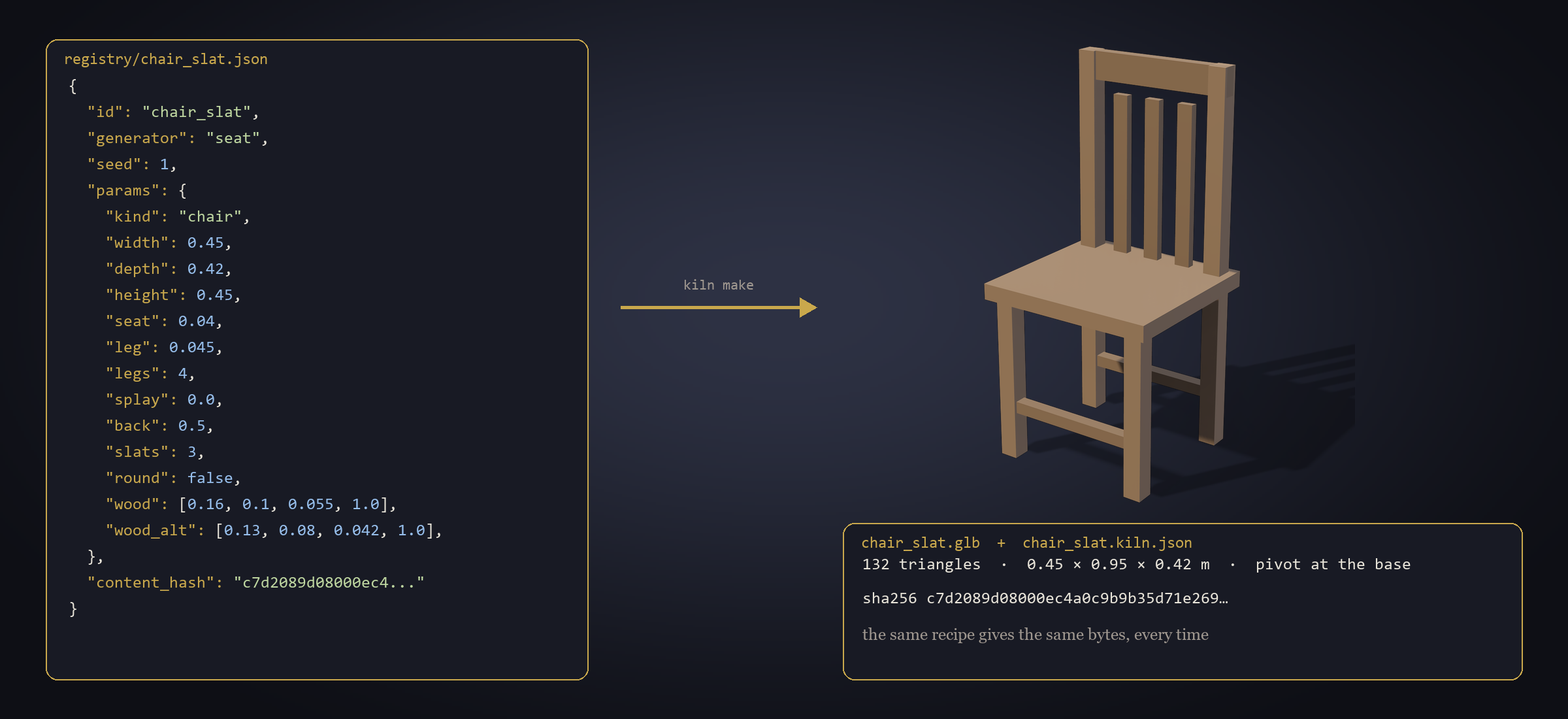
3D asset engine
Kiln
A procedural 3D asset pipeline. Declarative JSON recipes go in; deterministic, game-ready glTF 2.0 comes out: props, furnished buildings, whole towns, rigged and animated characters, and music. 49 generators and counting.
Explore Kiln →
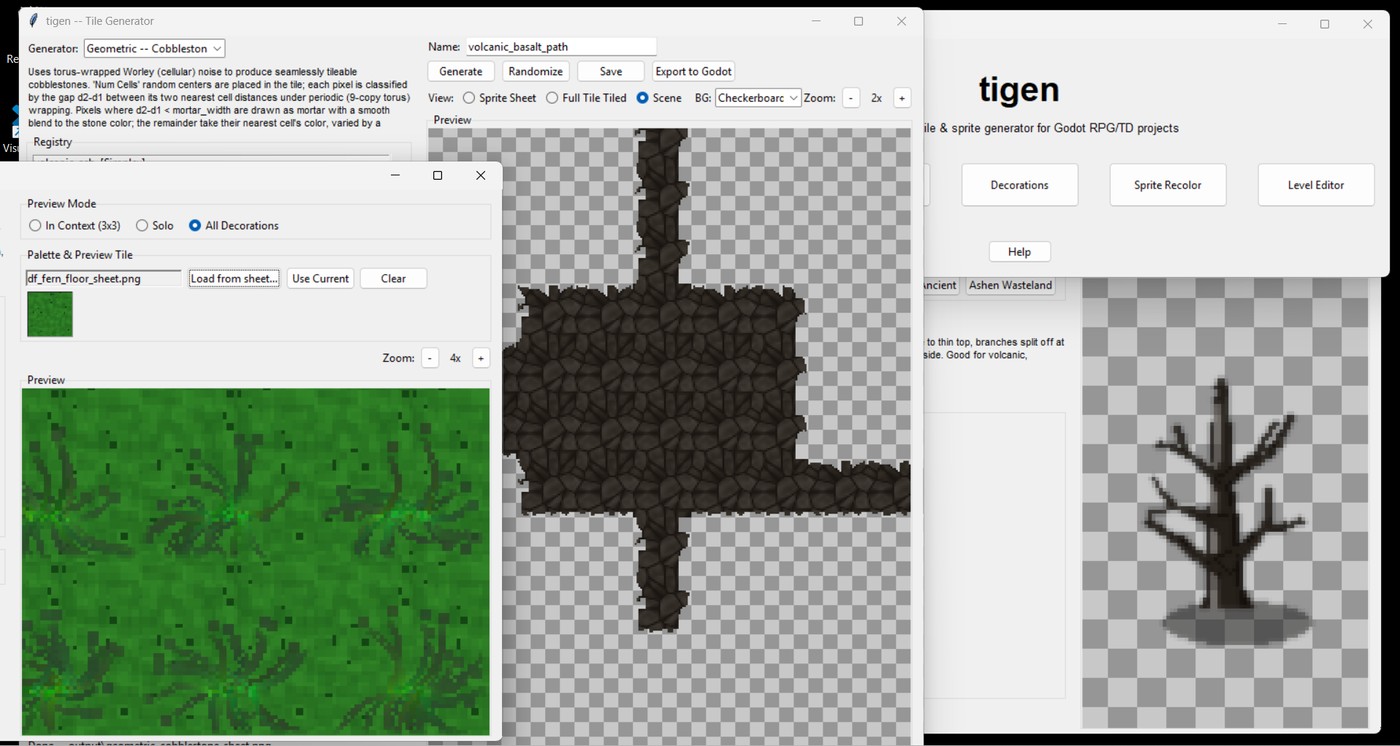
2D asset engine
TiGen
A procedural 2D tile and sprite generator. Simplex, fBm and Worley noise become autotile sheets, environment sprites and full level layouts: 42 generators, 776 assets, the art behind Defense of Kyrath’s biomes.
Explore TiGen →
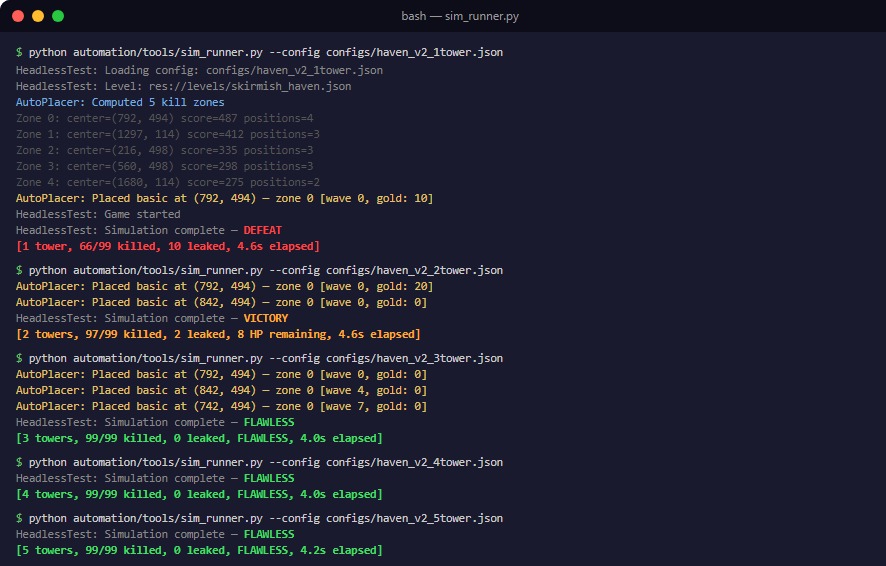
Automated testing
Headless balance testing
A headless Godot harness that plays Defense of Kyrath at 200× speed. An auto-placer scores path geometry to find kill zones, and batch runs across 50+ levels and a 15-tier loadout matrix drive the balance tuning.
Read how it works →
Machine learning
Neural-net function solver
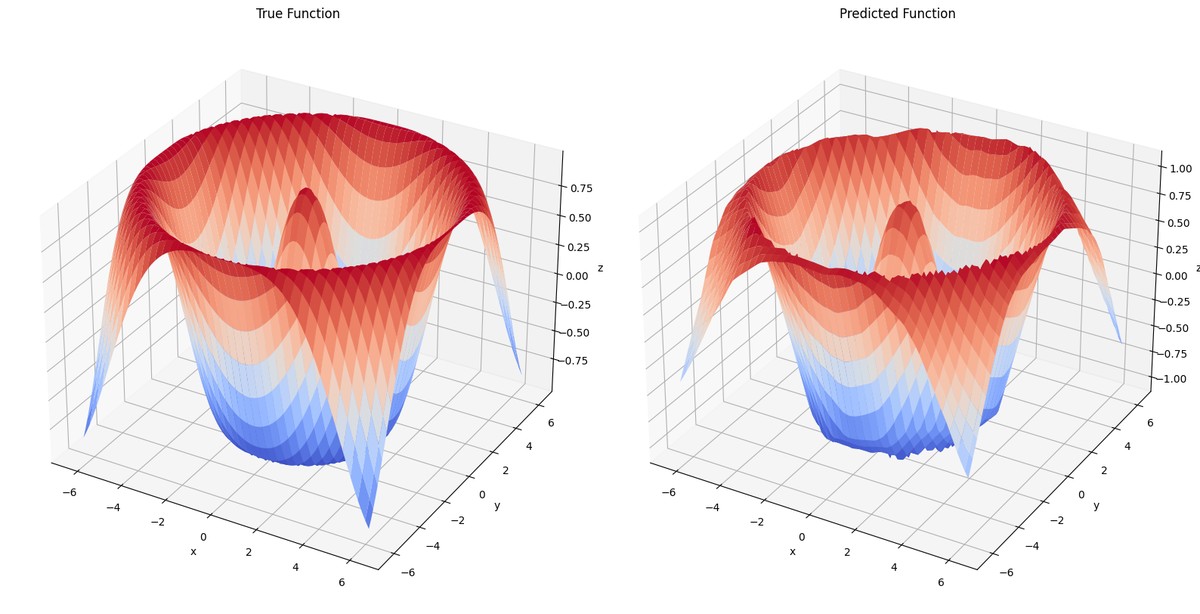
A TensorFlow network that solves an inverse problem: given samples of z = f(x, y), recover the unknown function. It trains on experimental data, or on a known function for validation. Shown: the true surface and the network’s reconstruction.
View on GitHub →